It started at a junction.
From a rural landscape to a railway junction, from workers’ housing to municipal independence: the people, places and turning points that shaped Entroncamento.
Before the railway
Entroncamento is often described as a city born from the railway. That is a useful description of its modern growth, but the land was not empty beforehand. The area belonged to a wider agricultural landscape connected to the Tagus and to neighbouring settlements.
The regional historical account draws on sixteenth-century Atalaia parish records that mention São João das Vaginhas chapel and people living at Casal das Gouveias. Farms around Quinta da Cardiga and the nearby river ports formed part of older patterns of work and movement. The railway would transform these connections, rather than create human settlement from nothing. [source]
The railway arrives: 1862–1864
The railway brought a different scale of activity. Following the construction arrangements of 1859, a stopping place developed near the Ponte da Pedra stream. On 7 November 1862, the Santarém–Abrantes railway section opened. Workers and specialists arrived to build, operate and maintain the line. [source]
A second date explains the city’s name. On 22 May 1864, the section from Entroncamento to Soure opened on the North Line. It met the existing East Line here, producing an entroncamento — a junction. The place name records a piece of railway geography. [source]
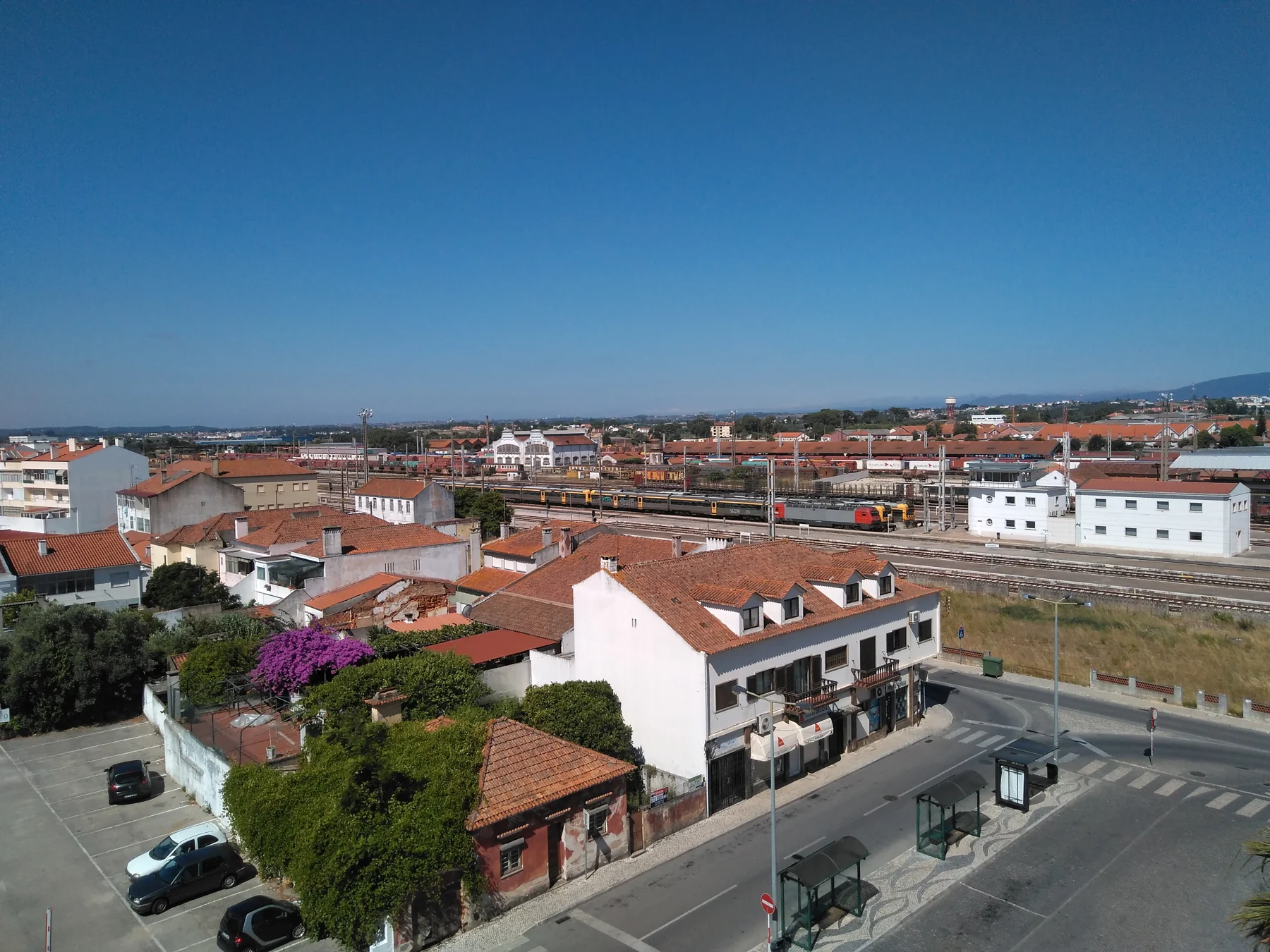
Stations need much more than platforms. Maintenance, workshops, supplies and administration generated a concentration of employment. Families came with the workers, while shops and services followed the people. This relationship between the railway complex and the settlement became the central thread of Entroncamento’s history.
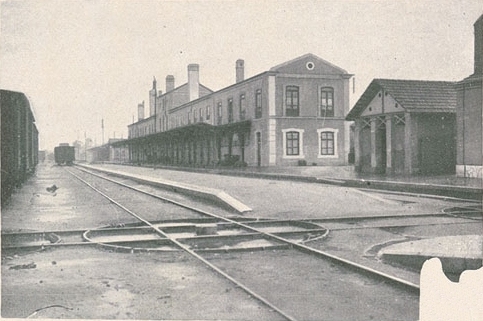
Entroncamento’s station: the starting point for understanding the city.
Workers, homes and a growing community
The arrivals brought regional backgrounds and skills into one growing settlement. Entroncamento’s story is therefore social as well as technical: it is about the families behind the trains, their education, their homes and their associations.
In 1874, the railway company’s board decided to establish a primary school for employees’ children. Company housing and welfare provision would become another lasting part of the townscape. [source]
The district archive dates Bairro do Boneco to 1900 and Vila Verde to 1919. Bairro Camões developed in the 1920s, with architecture associated with Cottinelli Telmo and Luís da Cunha. Its houses and gardens express a planned approach to workers’ accommodation; the neighbourhood school welcomed its first pupils in January 1928. [source] [source]
The neighbourhoods have taken different paths. Vila Verde retains its housing role, while the restored Bairro do Boneco houses the National Railway Museum’s documentation centre. Its courtyard and railway homes connect today’s archive work with the city’s working history. Municipal tourism guide ↗
Military installations from 1916 added another strand to this working town. Entroncamento’s connections and central position gave it strategic value, bringing additional personnel and families into the community. [source]
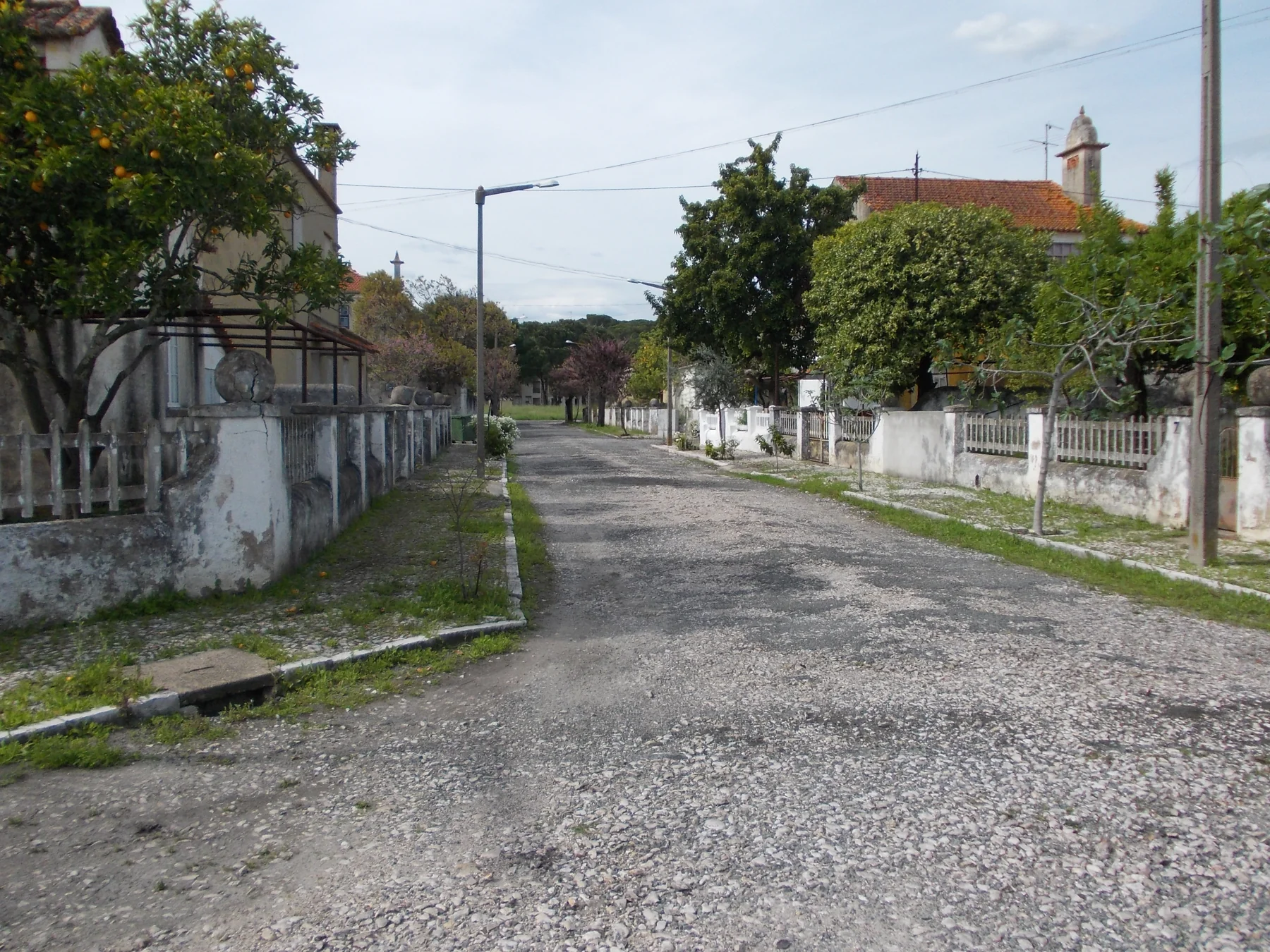
Railway housing made the history of work part of the urban landscape.
Becoming an independent municipality
For years, the growing settlement occupied land belonging to Torres Novas and Vila Nova da Barquinha. Its administrative identity developed in stages: it became a civil parish on 25 August 1926, then a town, or vila, in 1932. [source]
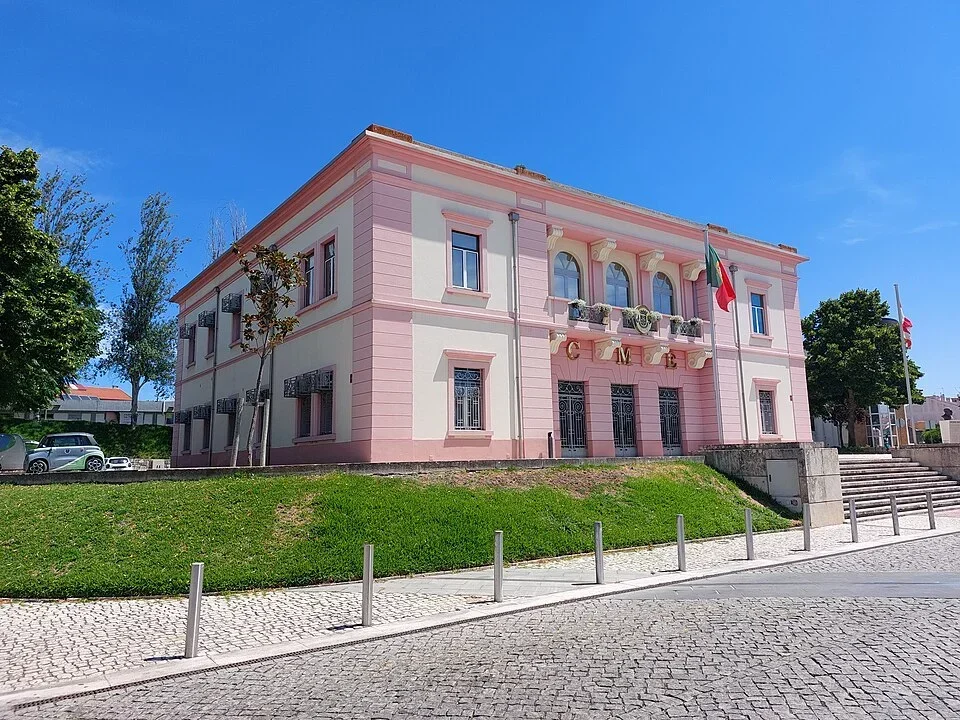
The decisive change came on 24 November 1945, when Entroncamento became an independent municipality. Its own local government reflected the scale and distinct character of the community that railway employment had helped create. [source]
The present municipal building was completed on 28 July 1946. Conceived for parish administration and other services, its construction had been delayed during the Second World War; it became the town hall of the new municipality. [source]
Rapid growth also put pressure on housing. The district archive records a 79% population increase between the 1930 and 1950 censuses. New estates and cooperative arrangements in the 1950s and 1960s were practical responses to the need for family homes. Housing history reveals the everyday challenges beneath the civic milestones. [source]
The modern city
Diesel and electric traction changed railway occupations and the labour needed to run the network. From the 1970s, commerce, services and construction became more prominent in Entroncamento’s economy. Its railway identity endured as the sources of work diversified. [source]
Urban form changed too. Early garden neighbourhoods were joined by apartment buildings, including seven four-storey blocks on Rua D. Afonso Henriques that supplied 56 homes in the early 1970s. The contrast helps explain how a company settlement developed into a broader urban community. [source]
1991 brought city status. Parliament approved the change on 20 June, a date remembered locally. Lei n.º 68/91 was published in the official gazette on 16 August. These are two stages of the same change, rather than competing dates. [source]
The parish structure changed next. A law published in August 2003 created Nossa Senhora de Fátima and renamed the existing parish São João Baptista. It took effect on 1 January 2004. Even the legal boundary descriptions refer to the railway, underlining its continuing role in the city’s physical organisation. [source]
The “Land of Phenomena”
The “Land of Phenomena” is another part of Entroncamento’s identity. Newspaper stories, unusual natural curiosities and local humour gave the city a reputation that travelled beyond its railway connections.
The municipal account connects the phenomenon stories particularly with Eduardo O. P. Brito and Leitão de Barros. Reported curiosities included a white blackbird and oddly shaped or oversized produce. Shops displayed strange objects, and the stories entered local souvenirs and popular memory. [source]
The stories offer a different route into understanding Entroncamento: a young city could create traditions of its own, through jokes, newspaper attention and the everyday curiosity of its residents.
Preserving railway history
The National Railway Museum did not appear overnight. Ideas for a museum circulated around the railway centenary in 1956. A letter from mayor Eugénio Dias Poitout in September 1965 documents Entroncamento’s interest, while training material and railway documents were being identified for preservation in the 1960s. [source]
Earlier exhibitions and museum activity led to the institution’s full inauguration on 18 May 2015. Entroncamento became a home for a national railway story, told through historic rolling stock, objects, documents and the buildings of the railway complex. [source] [source]
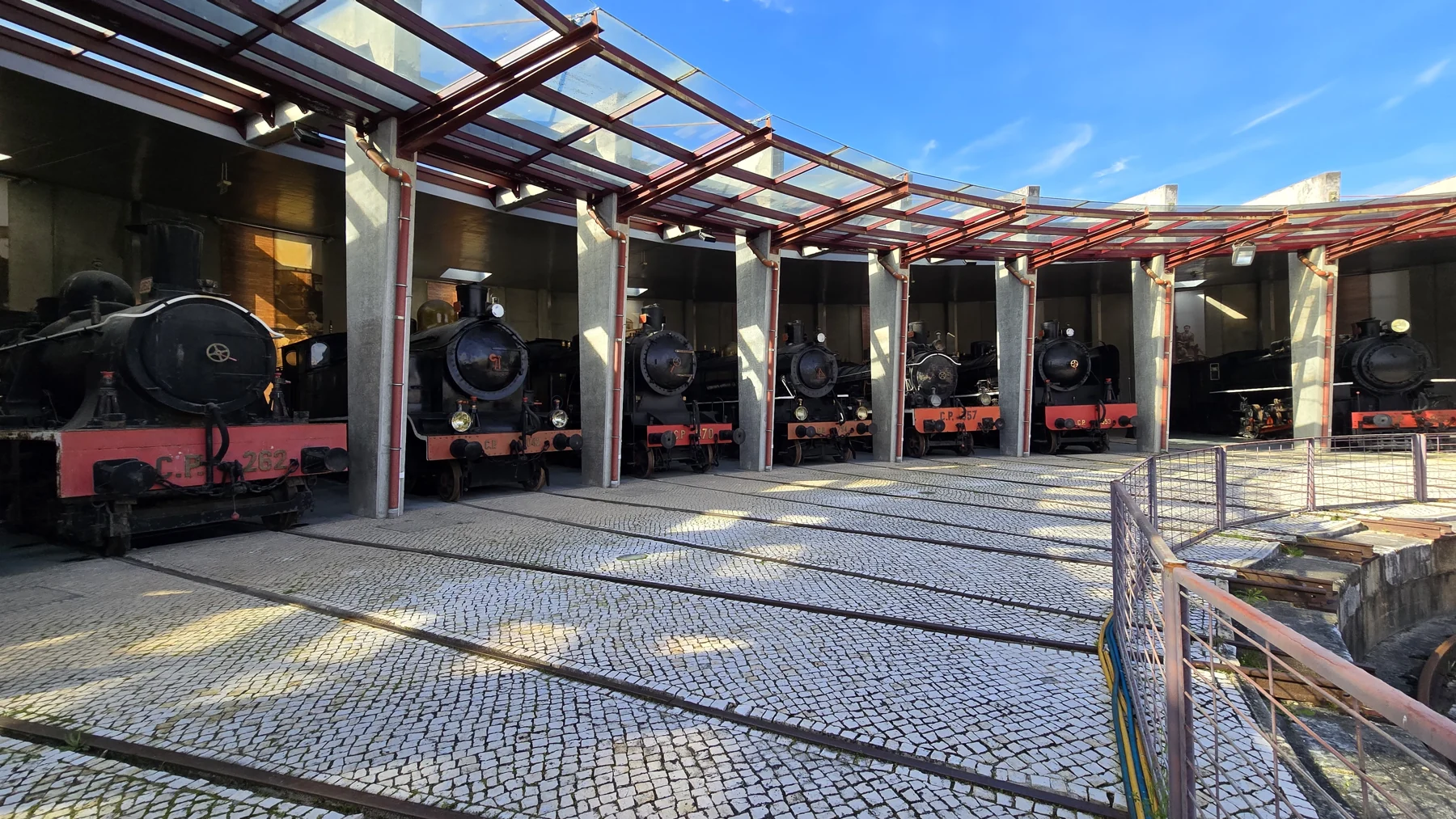
The museum’s setting is part of the collection. A former provisions warehouse recalls company welfare; the roundhouse retains a turntable from 1911; steam workshops and a 1920s power station speak to the labour and energy that sustained the system. [source]
Heritage interpretation also reaches into the city. A 2021 initiative brought attention to Bairro da Estação, Bairro do Boneco, Vila Verde and Camões, helping connect the museum’s objects to the homes and streets of railway families. [source]
Explore the museum and railway neighbourhoods ↗Historical timeline
A landscape with an earlier life
Farms, small settlements and routes towards the Tagus predated the railway. The modern city grew within an already inhabited landscape. [source]
The railway arrives
On 7 November, the Santarém–Abrantes section opens. The railway becomes the foundation for a new settlement. [source]
A junction gives the city its name
The Entroncamento–Soure section opens on 22 May, joining the North Line with the existing East Line. [source]
Education for railway families
The railway company decides to build a primary school for employees’ children. [source]
Bairro do Boneco
The railway welfare institution develops a neighbourhood for its community. [source]
A growing strategic role
Military installations bring further employment and families to the railway settlement. [source]
Railway neighbourhoods expand
Vila Verde and Bairro Camões make housing, gardens and community life part of the railway landscape. [source]
Parish, then town
Entroncamento becomes a civil parish on 25 August 1926 and a town in 1932. [source]
Municipal independence
The municipality is established on 24 November, marking a decisive step in local self-government. [source]
A town hall for the municipality
The municipal building is completed on 28 July and becomes the new council’s home. [source]
Homes for a growing population
New housing estates and cooperative initiatives respond to pressure on accommodation. [source]
New technologies, new livelihoods
Changes in railway work accompany a growing role for commerce, services and construction. [source]
City status
Parliament approves city status on 20 June; the law is published on 16 August. [source]
Two civil parishes
The 2003 law takes effect on 1 January, creating Nossa Senhora de Fátima and renaming the existing parish São João Baptista. [source]
A national museum fully opens
The National Railway Museum is inaugurated in its full form on 18 May. [source]